Schedule a Call
Ready to Upgrade Your Process Operations?
Ready to Upgrade Your Process Operations?
Build your brand faster with private label products. Learn how they work, top product types to sell, and common challenges to watch out for.

If you are building a health, personal care, or wellness brand, private labeling is one of the fastest ways to enter the market.
Instead of developing products from scratch, you partner with a manufacturer that already has tested, compliant formulations ready for production. You then customize the packaging and branding to make them your own.
According to Statista, more than one in five consumer goods products sold in the United States is a private label, showing just how widespread this model has become.
For modern beauty and wellness brands, private labeling offers a faster, lower-risk path to launch while building credibility and brand recognition.
In this article, we will break down what private label products are, how they work, their key advantages, and what types of products you can sell under your brand.
Key Takeaway:
Private label products are goods made by one company and sold under another brand’s name. The manufacturer owns the base formula, while the brand customizes elements like packaging, labeling, and fragrance to fit its identity.
Think of it this way: instead of developing a new Vitamin C serum from scratch, you choose one that’s already tested and compliant.
Then you make it look, feel, and sound like your brand. The same goes for protein powders, sleep gummies, or body lotions.
Private labeling helps you launch faster by using proven, compliant formulations without investing heavily in R&D. It’s a practical way to build a product line quickly while maintaining brand control and quality assurance.
At this point, you might be wondering — isn’t this the same as white labeling?
It’s a fair question because the two often sound interchangeable. But in reality, they serve very different purposes for your business.
Here’s a quick comparison to make it clear:
With the basics out of the way, let’s look at where private labeling really shines, in the products themselves.
From personal care to apparel, private label programs now cover nearly every high-demand category. Here are some product ideas that align with what modern consumers are looking for:

In skincare, results build trust. Private label products help you launch clean, tested formulations quickly, tailored to your audience and brand positioning. It’s the fastest way to create products that perform and stand out.
Here are the skincare categories that consistently drive growth across retail and D2C:
Wellness products work best when they blend credibility with convenience. Private label supplements let you offer clean, clinically backed formulations that support daily health, energy, and recovery without the long product development cycle.
Here are the top-performing categories in the growing nutraceutical market:
Personal care products are everyday essentials, the ones customers use, love, and reorder. This category is ideal for building loyalty and consistent revenue, especially when backed by clean, dermatologist-tested formulations and thoughtful packaging.
Consider adding these essentials to your private label lineup:
The wellness lifestyle doesn’t stop at skincare. Expanding into home and living products lets your brand become part of your customer’s daily environment, creating sensory experiences that build deeper emotional connection and loyalty.
These private label categories blend functionality with relaxation, helping your brand tap into the growing “self-care at home” trend:
Apparel is a natural extension for beauty and wellness brands evolving into lifestyle. From self-care wear to everyday accessories, it helps strengthen brand identity and turn loyal customers into part of your community.
If you’re expanding into lifestyle, start with these essentials:
Haircare is one of the fastest-growing private label segments in beauty, offering brands a natural extension of their skincare or wellness lines. It combines clean formulations, visible results, and strong consumer demand across both retail and D2C channels.
These product types continue to lead private label innovation:
As wellness moves beyond the bathroom shelf, functional foods are becoming a powerful extension for lifestyle brands. Private label packaged foods help you meet growing demand for clean, convenient, and nutrient-rich products that fit seamlessly into daily routines.
High-demand product ideas include:
Gift sets are a proven driver of retail appeal and repeat sales. They let you bundle top-performing products, test new combinations, and create seasonal or themed collections without developing new formulas.
Here are some private label kit ideas that consistently perform well:
Choosing the right products is only half the job. The other is avoiding common private label mistakes that can delay growth or impact consistency.
Private labeling offers speed, flexibility, and strong profit potential, but it’s not without challenges. Many brands underestimate what it takes to maintain consistency, compliance, and differentiation in a competitive market.
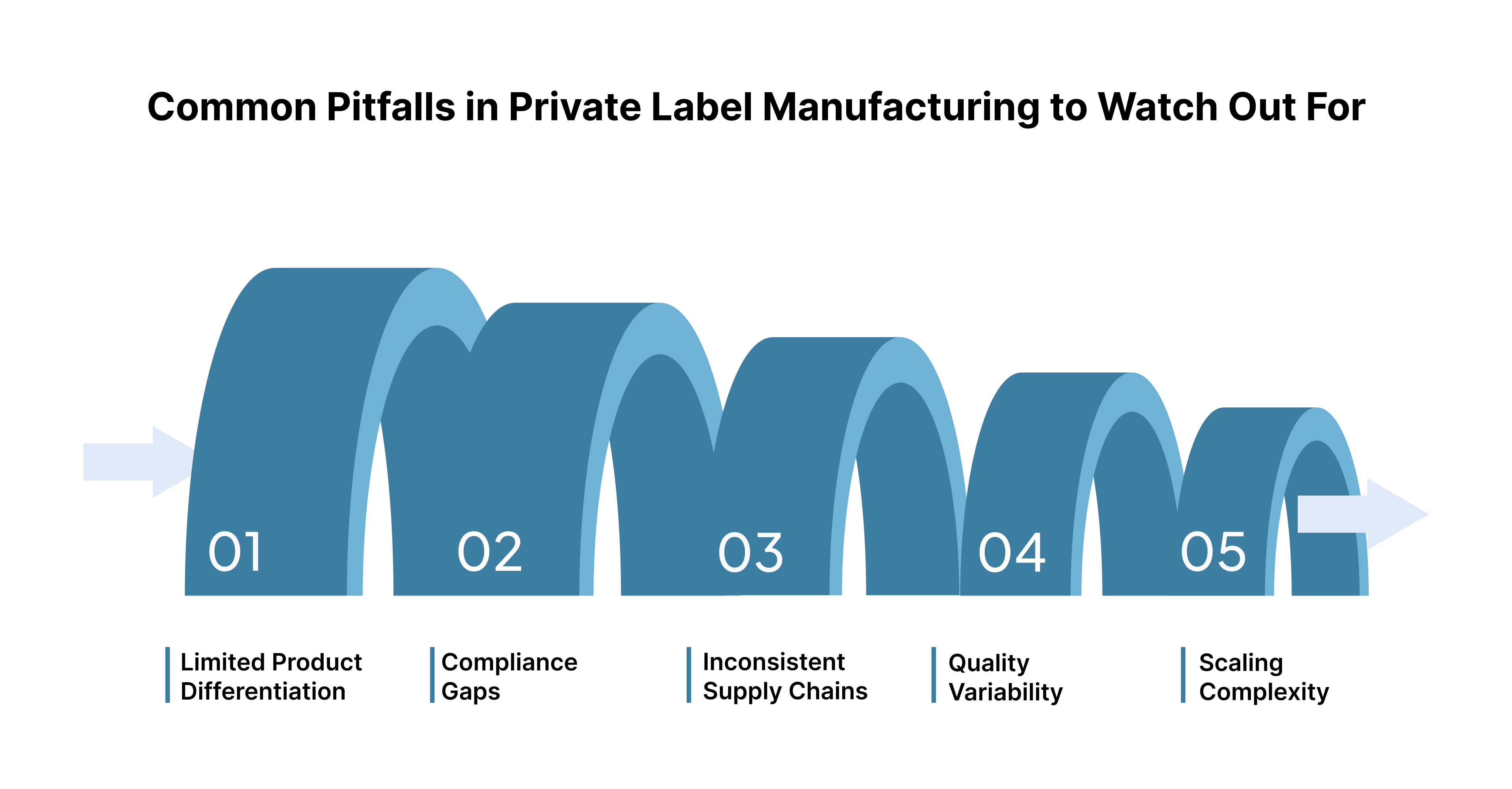
Here are some of the most common hurdles:
These challenges don’t have to hold your brand back. They just mean you need a partner with the systems and experience to keep your products consistent, compliant, and built to grow.
Most growing beauty and wellness brands face the same problems when scaling private label production: fragmented vendors, slow production timelines, and inconsistent quality across batches. Compliance adds another layer of complexity, and one missed documentation step can delay retail approvals or risk recalls.
Managing all of this while trying to scale can quickly overwhelm even established teams.
As a CGMP-certified, FDA-registered, and USDA Organic manufacturer, Respect Manufacturing streamlines everything from R&D to final packaging under one roof. The result is faster launches, consistent quality, and complete visibility across every batch.
What sets Respect Manufacturing apart:
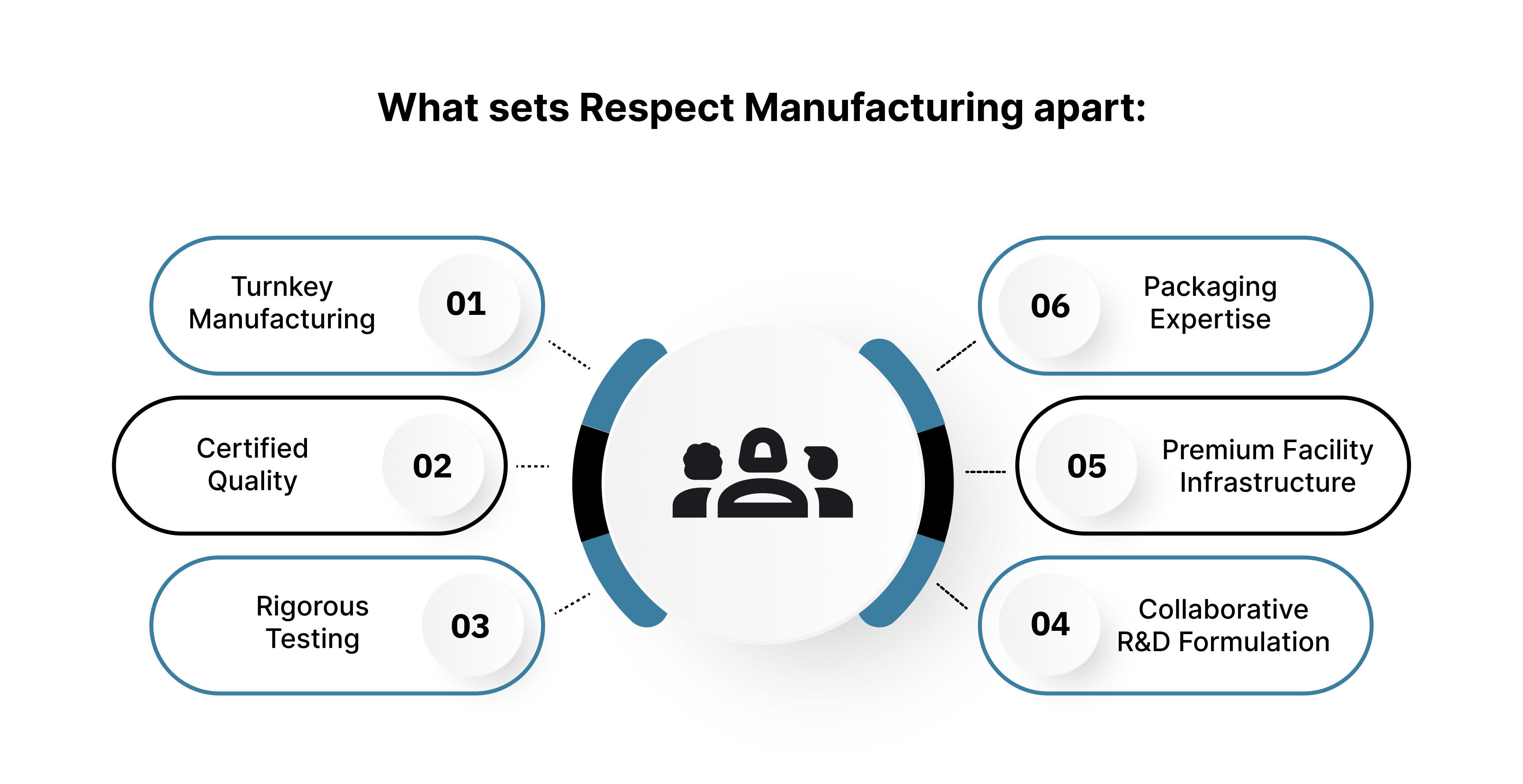
At Respect Manufacturing, quality, compliance, and transparency are built into every batch. Whether you are launching your first private label product or scaling an established line, we help you grow with consistency and confidence.
Private label success comes down to one thing: consistent execution. From formulation and compliance to packaging and delivery, every stage has to align to maintain quality and trust as your brand grows.
That’s where Respect Manufacturing makes the difference. With FDA registration, CGMP certification, and a proven turnkey process, we help brands launch faster, scale smoother, and stay compliant without compromise.
Bring your products to market with a partner that values precision, transparency, and performance as much as you do. Partner with us today to scale your private label line with confidence.
Examples include skincare serums, dietary supplements, or household items produced by a manufacturer and sold under brands like Target’s “Up & Up” or Amazon’s “Amazon Basics.”
Yes. Private labeling is fully legal as long as products meet industry regulations, labeling requirements, and safety standards such as FDA or CGMP compliance for cosmetics and supplements.
Yes. Walmart sells several in-house private label brands across personal care, grocery, and household categories. These products are manufactured by third-party partners and sold exclusively under Walmart’s brand names.
The four main types are generic, copycat, premium, and value-innovative private labels. Each differs in price, quality, and how they position your brand against national or retail competitors.