Oops! Something went wrong while submitting the form.
X
How to Build Your Own Brand Products: A 7-Step Guide to Turn Ideas into Market-Ready Products
Learn how to build your own brand products in 7 steps, from defining your vision to market launch, with a focus on quality, compliance, and scalable growth.
Building your own brand doesn’t require owning a factory or managing every aspect of production. Many brand leaders believe they must design, manufacture, and oversee every detail themselves, but that’s not the case.
In reality, the right manufacturing partner can handle the complexities of product development, freeing up time and resources to focus on growing your brand. Whether it's skincare, dietary supplements, or any other product, turning your idea into a market-ready brand is all about strategic partnerships and a clear, actionable plan.
This guide will show you how to handle that process, step by step, so you can focus on building the brand and leave the manufacturing to the experts.
Key Takeaways
Define Your Vision, Niche, and Target Audience: Your brand’s foundation starts with clearly defining its purpose, identifying your niche in the market, and understanding your target audience.
Choose Your Product Range: Focus on starting small with a core product line. By identifying current market trends and consumer demands, you can scale gradually and expand your offerings based on customer feedback.
Decide on Formulation & Manufacturing: Determine whether to develop custom formulations for uniqueness or go with private label manufacturing for faster, more cost-efficient production.
Build Brand Identity & Positioning: Establish a strong brand identity by defining your core values, creating a unique visual identity, and positioning your brand in the market.
Ensure Quality, Compliance & Regulatory Readiness: Focus on obtaining critical certifications like cGMP, organic certifications, and adhering to safety standards to protect your brand, maintain consumer trust, and remain compliant in the personal care and supplement markets.
The Benefits of Starting Your Own Brand: Why Now Is the Right Time
Starting your own brand offers a unique opportunity to control your product's story and shape your market presence. For those already in the business, outsourcing manufacturing can relieve the burden of day-to-day operations. Here’s why building your own brand and partnering with the right manufacturing team is crucial for growth:
Full Control Over Your Brand: Owning your brand allows you to shape the product, messaging, and customer experience. It gives you the power to make strategic decisions that align with your vision.
Increased Profit Margins: By cutting out third-party branding or licensing fees, you can retain more of the revenue generated from each product sale, boosting your profitability.
Brand Loyalty and Recognition: A well-defined brand creates an emotional connection with consumers, building loyalty and making your products stand out in a crowded market.
Reduced Manufacturing Headaches: Outsourcing manufacturing to a trusted partner allows you to offload the complexities like R&D, safety, quality testing, innovation, and more, so you can focus on growing your brand.
Scalability and Flexibility: As your brand grows, outsourcing manufacturing allows you to scale quickly without the overhead of owning a factory, so that you can keep up with demand without compromising quality.
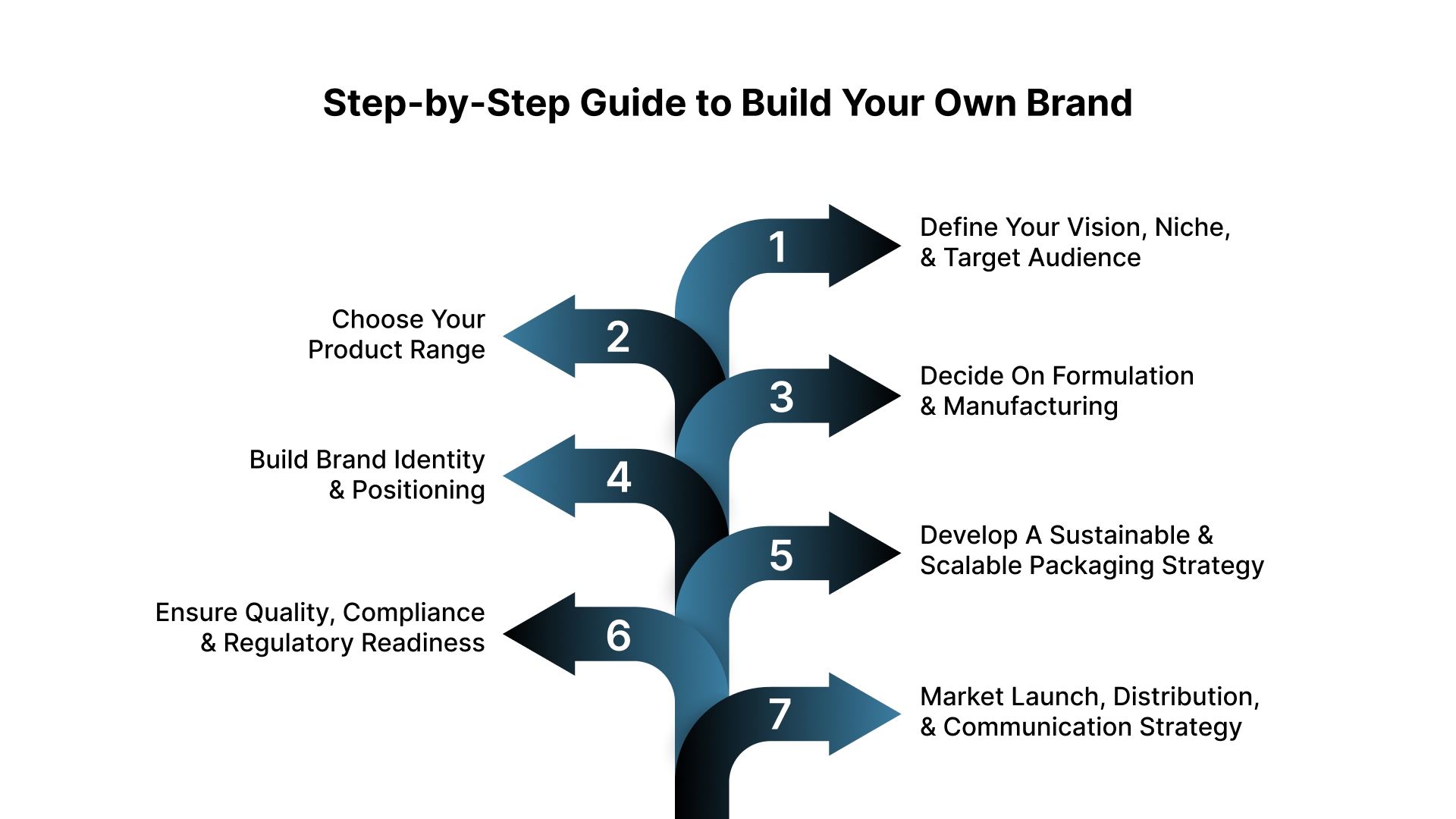
Top 7 Step-by-Step Guide to Build Your Own Brand Products
Building your own brand products is a dynamic process that requires strategic thinking, planning, and collaboration. Let’s break down the journey into 7 steps to help you define your brand, develop your products, and launch them successfully into the market.
Step 1: Define Your Vision, Niche, and Target Audience
Before diving into product development, you need to define your brand’s foundation. This step will make sure that every decision you take, from sourcing to marketing, aligns with your core values and resonates with your target audience.
Define Your Brand’s Purpose: What does your brand stand for? Whether it’s natural skincare or health supplements, having a clear mission helps guide product creation and messaging.
Find Your Niche: Identify your unique selling point. Are you targeting eco-conscious consumers with a specific product line? Narrowing your focus helps you stand out in a crowded market.
Know Your Target Audience: Who are you selling to? Understand their demographics, needs, and pain points. This way, your products will address real demands and help tailor your brand’s messaging effectively.
Analyze Competitors: Understand the market landscape. Who else is serving your target audience, and where can you differentiate? This gives you a competitive edge and helps refine your brand’s positioning.
Step 2: Choose Your Product Range
Choosing the right product range is key to positioning your brand for success. It’s about balancing market demand, brand identity, and manufacturing capabilities. Here’s how to narrow it down:
Understand Market Demand: Identify current trends, for example, in personal care or dietary supplements. Consumers are seeking natural, eco-friendly, and science-backed products.
Pick Your Categories: Decide whether to specialize in skincare, haircare, wellness supplements, or a combination. Each category has its own nuances, but starting with a focused range is key to building a strong foundation.
Start Small, Then Scale: Launch with a core product range (e.g., a basic skincare line or a private label supplement) and expand as your brand grows and customer feedback is collected.
Think Long-Term: Plan for future product expansion. Start with a complementary range and gradually introduce new products as your brand gains momentum.
Iterate Based on Feedback: After your products hit the market, gather customer feedback to refine and improve your offerings.
Step 3: Decide on Formulation & Manufacturing
Formulation is at the core of your brand. It determines the uniqueness of your product and how it aligns with your brand’s values. At this stage, you need to decide whether you will:
Develop Custom Formulations: Ideal for brands that want to create unique products with specific ingredients or benefits. Custom formulations give you full control over product quality and claims, but they require time, R&D, and a larger budget. This route is often chosen by brands looking to offer innovative, highly differentiated products in the market.
Use Private Label Manufacturing: A quicker and more cost-effective option. With a private label, you can select from pre-tested, customizable formulas offered by manufacturers. This route allows you to focus on branding and marketing without worrying about product development or regulatory compliance.
It’s a great, attractive choice for new brands, as it reduces risk, handles compliance (such as FDA or GMP certification), and provides a faster time-to-market.
For most new personal care or supplement brands, private label likeRespect manufacturing is often the best option as they offer turnkey solutions. It allows you to tap into an established supply chain and meet industry standards without the extensive investment required for custom formulation.
Step 4: Build Brand Identity & Positioning
Building your brand isn’t just about slapping a logo on a product. It’s about creating a memorable identity that resonates with consumers and sets you apart in a competitive market. After all, it doesn’t matter if you start out selling water bottles you bought on Alibaba and rebrand them in your living room; Jeff Bezos started Amazon from his garage.
Define Your Brand’s Core Values and Promise: Clarify why your brand exists and what it stands for. Your values should reflect what matters most to your audience, whether it’s sustainability, quality, or innovation. This will shape your product development and marketing.
Develop a Unique Visual Identity: Your logo, colors, and design should reflect your brand’s essence. Keep it simple yet distinctive. Think of Apple’s minimalism or Nike’s boldness—your visuals should instantly communicate your brand’s personality.
Craft Your Brand’s Voice and Messaging: Your brand voice sets the tone for customer interactions. Whether it’s authoritative, friendly, or innovative, it needs to align with your brand’s personality and appeal to your target audience’s needs.
Identify and Leverage Your Brand’s Differentiators: What makes your brand different? Whether it’s quality, unique formulation, or sustainability practices, your differentiators should be clearly communicated.
Position Your Brand in the Market: Decide how you want customers to perceive your brand. Are you a premium brand like Chanel or an affordable luxury like Target? Positioning will guide your pricing, product offerings, and marketing.
Step 5: Develop a Sustainable and Scalable Packaging Strategy
Packaging is not just about protecting your product; it’s a key part of your brand identity and an opportunity to showcase your commitment to sustainability. As eco-conscious consumers continue to demand more from brands, they can increase your brand’s appeal.
Prioritize Eco-Friendly, Vegan Materials: Consumers are drawn to brands that use recyclable, biodegradable, and sustainable packaging. Using materials like glass, paper-based packaging, plant-based inks, and vegan products reduces your carbon footprint.
Consider Refillable and Reusable Packaging: Offering refillable solutions encourages brand loyalty. Personal care brands like Lush and Kiehl’s have embraced this model by allowing customers to reuse packaging, which reduces waste and promotes sustainability.
Functionality and Convenience: Packaging must also serve its primary function: protecting your product. Ensure that it’s easy to use, durable, and capable of handling the product securely. Consider travel-friendly packaging for personal care items or single-use sachets for supplements.
Focus on Scalability: As your brand grows, your packaging must scale well. Choose packaging solutions that can easily adapt to increasing production volumes without compromising cost-efficiency or quality.
Compliance and quality control are critical to protecting your brand and maintaining consumer trust. In industries like personal care and supplements, meeting regulatory standards is necessary for legal reasons, builds credibility, and safeguards your reputation.
cGMP: This certification is important for consistent, high-quality manufacturing processes for supplements or personal care products.
Certified Organic: Guarantees your ingredients are grown without synthetic pesticides, ideal for eco-conscious brands.
USDA Organic: A rigorous certification for products made from at least 95% organic ingredients.
OTC Compliance: For medicinal or therapeutic products, confirming FDA approval and safety.
Maintain consistent product quality through Ingredient testing, Batch tracking for traceability from raw material to finished product, and Stability testing.
Step 7: Market Launch, Distribution, and Communication Strategy
Once your brand and products are ready, it’s time to launch and get them into the hands of your customers. A well-executed launch, paired with a solid distribution and communication strategy, sets the stage for long-term growth and brand visibility. Here’s how to approach these critical components:
1. Plan Your Product Launch
Timing: Choose the best time for launch based on market trends or seasonal opportunities.
Launch Events: Use events (virtual or physical) to generate buzz and engage customers.
Influencer Partnerships: Collaborate with influencers to build credibility and expand your reach.
2. Distribution Strategy
D2C (Direct-to-Consumer): Start with a well-designed e-commerce site for control and higher margins.
Retail & Wholesale: Once established, move into retail or work with distributors to expand reach.
Subscription Models: Offer a subscription service for repeat purchases, especially for consumables.
3. Communication and Marketing Strategy
Consistent Messaging: Keep messaging aligned with brand values and product benefits across all platforms.
Content Marketing: Use social media, email marketing, and blogs to engage your audience.
Customer Testimonials: Showcase reviews and feedback to build trust and credibility.
Paid Ads: Invest in social media ads or Google Ads to increase visibility and drive traffic.
Conclusion
Building your own brand is a powerful way to take control of your product’s journey from concept to market. By following the 7 steps outlined in this guide, from defining your vision to launching and scaling your products, you set the foundation for a strong, successful brand.
Whether you opt for private-label manufacturing, sustainable packaging, or a compliance-ready strategy, each decision will contribute to your brand's long-term success.
Respect Manufacturing offers comprehensive, turnkey solutions for wellness, personal care, and supplement brands. From custom R&D and cGMP-certified manufacturing to packaging, quality testing, and supply chain management, they provide end-to-end support to help brands launch and scale. Their expert services allow you to focus on growing your brand while they handle production and regulatory compliance at every step. Contact us today to learn how we can help you bring your vision to life.
FAQs
1. What are the 7 brand elements?
The 7 key elements of branding are brand purpose, vision, mission, values, positioning, personality, and voice. These elements define how a brand connects with consumers and communicates its identity.
2. What is the 3 7 27 rule of branding?
The 3-7-27 rule suggests that in branding, a message should be heard three times in a conversation, seven times in a campaign, and ideally 27 times for full impact. This emphasizes repetition and consistency for brand recognition.
3. What are the 4 V’s of branding?
The 4 V’s of branding are visibility, vulnerability, voice, and values. These elements help define how a brand presents itself, communicates with consumers, and stays true to its core principles.
4. What is the ABCD of personal branding?
The ABCD of personal branding stands for Authenticity, Branding yourself, Consistency, and Differentiation. This framework highlights how personal brands should be authentic, consistent, and distinct from others in their field.
5. How many products should a brand have?
A brand should ideally start with a focused product range that aligns with its core values and target market. While there’s no fixed number, starting small with a few key products helps build brand recognition and allows for scaling based on consumer feedback.
Get in touch
Thank you! Your submission has been received!
Oops! Something went wrong while submitting the form.
Trusted by 100+ Growth Leaders.
Related blogs
8 min read
How To Start Your Own Hair Product Line In The USA: A Complete Operational Guide For 2026
How to start your own hair product line in the USA with a step-by-step operational guide covering R&D, MoCRA compliance, packaging, and turnkey manufacturing.
Explore FDA packaging labeling requirements for food, including ingredient declarations, allergen labeling, and compliance strategies to meet FDA standards.