Schedule a Call
Ready to Upgrade Your Process Operations?
Ready to Upgrade Your Process Operations?
Discover the benefits of FSC-certified packaging, its types, certification process, and how it supports sustainable branding for wellness & skincare.
In 2026, sustainable packaging is no longer a nice‑to‑have feature; it’s becoming table stakes for wellness, skincare, and supplement brands aiming to scale with integrity. The global sustainable packaging market is projected to grow to over US$448.53 billion by the end of 2030, driven by rising consumer demand and tightening environmental regulations.
Meanwhile, a recent survey also shows 69% of shoppers expect brands to offer sustainable packaging, making eco‑friendly packaging a clear factor in purchase decisions.
In this blog, we will explore what FSC-certified packaging is, its benefits for your brand, and why it’s crucial in today’s market. We’ll also cover alternative sustainable packaging options and the importance of regulatory compliance.
FSC® (Forest Stewardship Council) certified packaging uses materials from forests managed under strict environmental, social, and economic guidelines. The FSC certification verifies that the raw materials, such as wood or paper, are responsibly sourced, promoting sustainable forest management.
This certification tracks the material through a chain-of-custody process, guaranteeing that every step from forest to final product adheres to FSC standards.
FSC label guarantees that luxury cosmetic packaging materials are sourced sustainably, with a focus on several key areas:
Also Read: Turnkey Supplement Manufacturing
Knowing what FSC certification encompasses is one thing, and recognizing its tangible impact on your business operations is another. The benefits extend far beyond compliance.
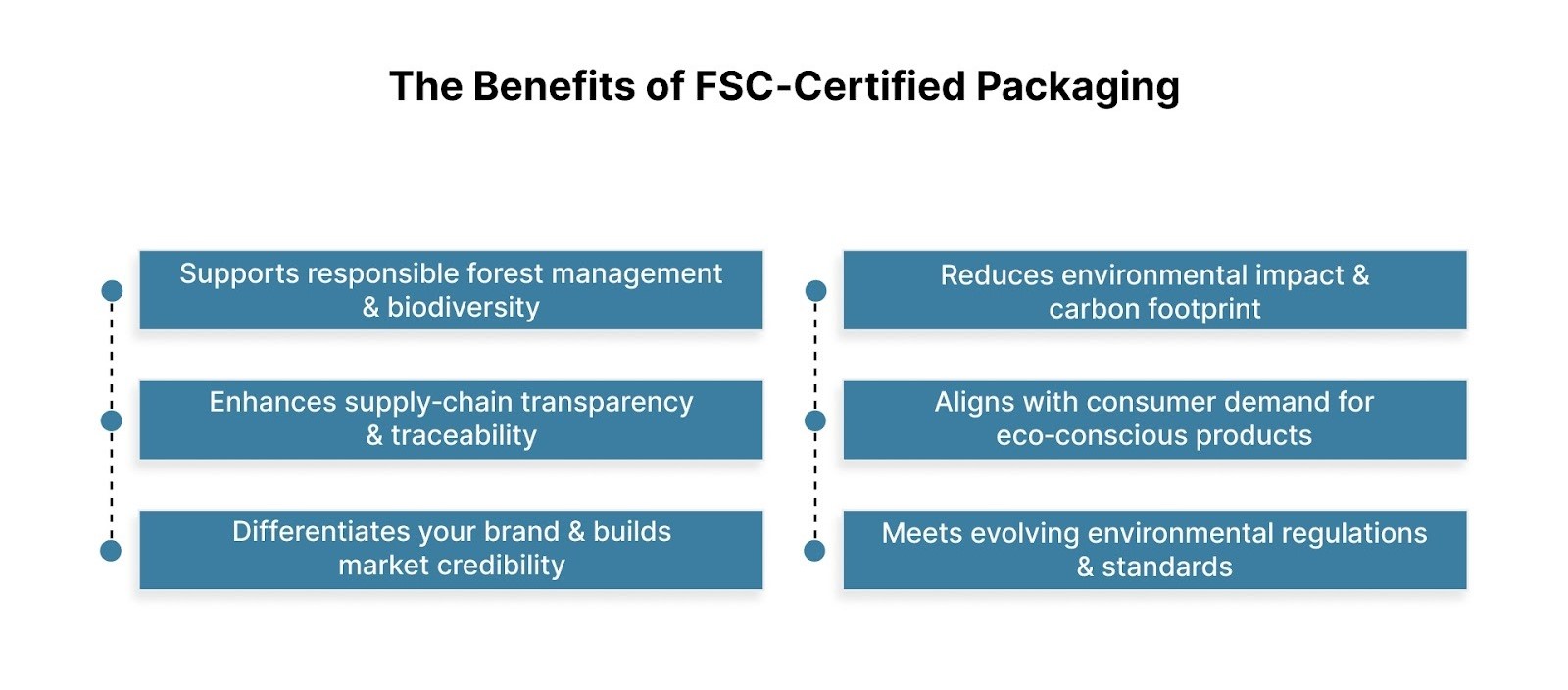
Using packaging certified by the Forest Stewardship Council (FSC) brings clear environmental, social, regulatory, and brand advantages. Below are key reasons why FSC‑certified packaging matters, especially for wellness, skincare, and supplement brands focused on sustainable growth.
FSC certification requires forests to be managed under global standards that safeguard ecosystems, prevent deforestation, protect high‑conservation value areas, and preserve habitats for wildlife.
Materials from FSC‑certified forests support sustainable logging and reforestation practices. That helps maintain forest carbon sinks and reduces the ecological footprint tied to packaging production.
FSC uses a Chain‑of‑Custody (CoC) certification system. That tracks forest‑based materials from origin through manufacturing to final packaging. This transparency adds credibility and helps brands back sustainability claims with verifiable sourcing.
Many consumers now factor sustainability into purchasing decisions. FSC‑certified packaging signals ethical sourcing and environmental responsibility. This can positively influence brand trust, loyalty, and purchasing behaviour.
In sectors like wellness, skincare, and supplements, packaging often becomes part of brand identity. FSC certification offers a visible mark of sustainability that can distinguish your products from competitors and appeal to retailers or distributors prioritizing eco‑friendly sourcing.
As global regulations tighten around sourcing, deforestation, and sustainability, FSC‑certified packaging provides a concrete way to meet compliance requirements. This reduces regulatory risk while positioning your brand as forward‑thinking.
Respect Manufacturing supports brands looking to meet eco-friendly packaging goals. Through their turnkey and refillable packaging solutions, they make sure that every product, whether in skincare, supplements, or personal care, reflects the brand's values of quality and environmental stewardship.
The value of FSC certification becomes even clearer when you examine the specific label types, each designed to communicate different sustainability achievements.
FSC labels provide transparency, allowing consumers and businesses to verify the sustainability and ethical sourcing of packaging materials. By choosing FSC-certified products, brands can support responsible forest management and reduce environmental impact.
While the FSC 100%, Recycled, and Mix labels communicate your sustainability commitment, the materials themselves determine which label your packaging can actually carry.
When you choose packaging labeled by the Forest Stewardship Council (FSC), you are selecting from a diverse set of forest‑based materials, not just one standard “paper box.” FSC certification covers a wide range of materials suitable for packaging, shipping, and even specialized applications. Here are the common materials and packaging types:
Selecting the right materials is only half the journey. The other half is making sure the materials remain certified and uncontaminated throughout every production step.
Chain of Custody (CoC) is the process that tracks the movement of FSC-certified materials from the forest (or recycling stream) all the way through to the final product that carries the FSC label. It ensures that materials labeled as FSC-certified have not been mixed with uncertified or illegal materials during the manufacturing process.
CoC certification is vital for companies involved in producing, processing, and trading FSC-certified products.
Understanding CoC's purpose sets the stage for the actual implementation. The certification process itself follows a structured path, and brands typically want to know exactly what steps they'll need to take to achieve and maintain compliance.
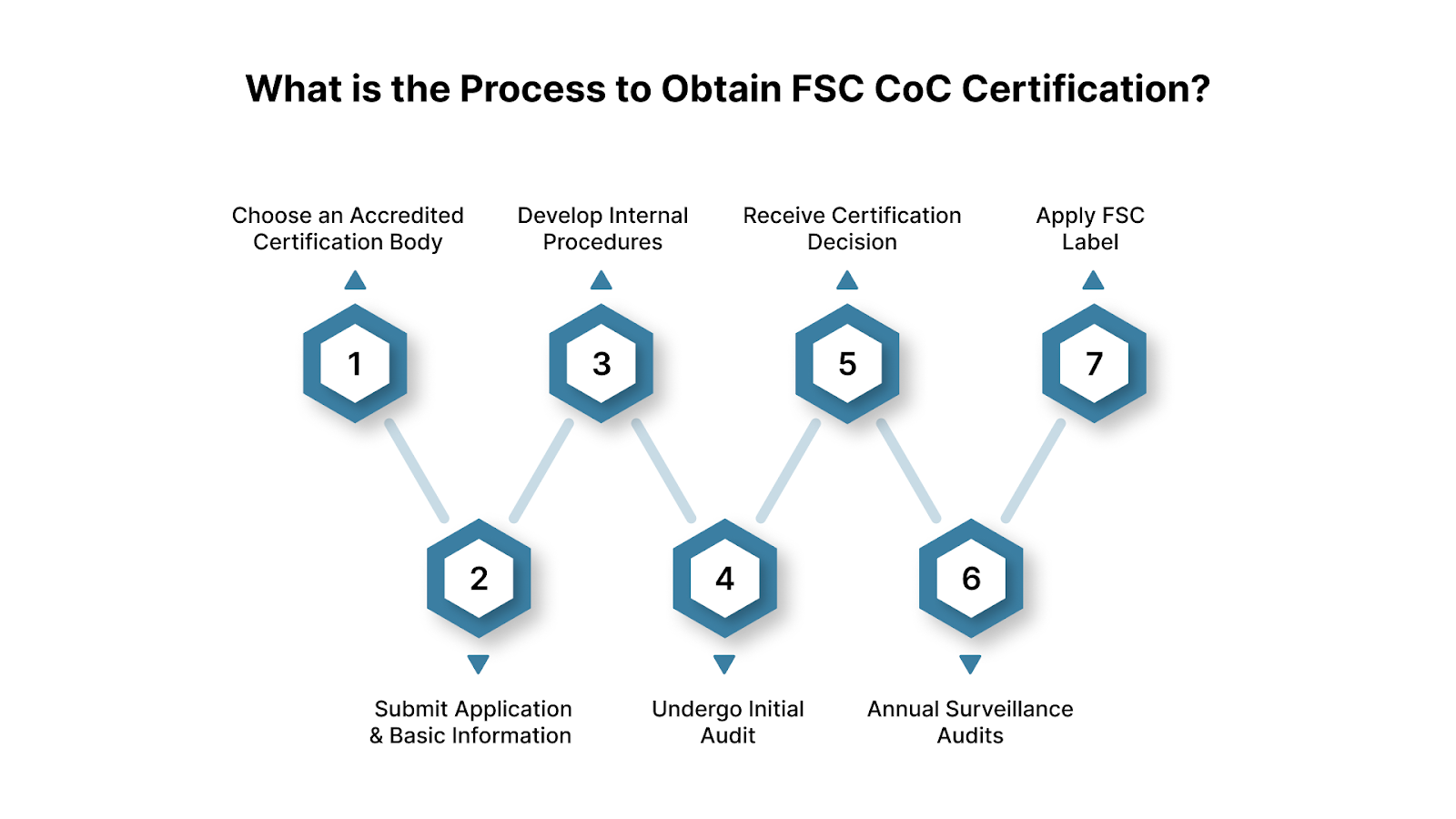
Becoming FSC CoC certified involves several key steps, with the process being straightforward for businesses of all sizes. For smaller businesses (those generating less than $5 million annually from wood products), group certification also offers a cost-effective path to certification.
Step 1: Choose an Accredited Certification Body: FSC doesn’t certify companies directly; instead, it applies through an FSC‑accredited certification body, which will audit your operations based on FSC standards.
Step 2: Submit Application & Basic Information: Provide details such as your company name, production processes, product types, and how you’ll handle materials (storage, traceability, segregation).
Step 3: Develop Internal Procedures: Implement documented procedures for sourcing, material flow, labeling, and maintaining separation between certified and non-certified materials.
Step 4: Undergo Initial Audit: An auditor will assess your processes, materials handling, and record‑keeping, and ensure all standards are met.
Step 5: Receive Certification Decision: If compliant, you'll be issued an FSC CoC certificate. Only then can you apply FSC labels to your packaging.
Step 6: Annual Surveillance Audits: Stay certified through regular audits, maintaining compliance with FSC standards and proper use of FSC labels.
Step 7: Apply FSC Label: Once certified, you can legally use the FSC logo and labels on your products/packaging, with all required details, including license code and product material type.
The certification journey doesn't happen in isolation. Behind each step are specific organizations with defined roles, each responsible for maintaining the integrity of the FSC system you're entering.
The process to become FSC certified involves third-party organizations that maintain compliance with sustainability practices and standards. These entities are crucial in maintaining the integrity of FSC’s certification process. The key certification bodies involved in the process include:
Now that you understand the FSC framework and the players involved, the practical question emerges: who can actually guide you through this process and deliver on these promises? This is where manufacturing partners with proven expertise become invaluable.

Respect Manufacturing is well-positioned to support brands in the wellness, skincare, and supplement industries looking for reliable, high-quality manufacturing solutions. Their commitment to quality, consistency, and traceability makes them a viable partner for brands focused on sustainability.
FSC-certified packaging is a key factor in building a sustainable, eco-conscious business. From responsible forest management to supply chain transparency, FSC certification helps brands meet consumer demand, reduce environmental impact, and comply with regulations.
Understanding the different FSC label types, packaging materials, and the CoC certification process allows you to make decisions about sourcing packaging that aligns with your sustainability goals.
With years of experience in the wellness, skincare, and supplement industries, Respect Manufacturing offers turnkey solutions that help brands produce high-quality products with sustainable packaging. Their expertise covers formulation, manufacturing, and packaging, with a focus on quality and transparency.
Contact us today to explore how we can support your brand’s sustainable growth with innovative packaging solutions.
FSC is often regarded as more stringent in environmental and social standards, while PEFC is more widely used, especially for smaller landowners.
Yes, FSC is an eco-label that certifies products come from responsibly managed forests with a focus on sustainability and ethical practices.
FSC packaging features the FSC logo with a unique license code, indicating the material's sustainability certification (FSC 100%, Mix, or Recycled).
FSC 70% means 70% of the product is made from FSC-certified material, while the rest may be controlled wood or recycled content.
FSC-certified rubber comes from forests managed under FSC standards, ensuring sustainability and fair labor practices in the supply chain.