Schedule a Call
Ready to Upgrade Your Process Operations?
Ready to Upgrade Your Process Operations?
Learn what's a batch code, what it means on products, why it’s vital for quality control, and how traceability protects brands under FDA & CGMP standards.

According to a 2024 Global Quality in Manufacturing Survey, 73% of manufacturers reported experiencing a product recall within the last five years, and 39% said each recall cost between US $10 million and $49.99 million to rectify. Those numbers reveal the staggering financial and reputational risks that come with even small lapses in product traceability.
For fast-scaling wellness, skincare, and supplement brands, batch codes are a simple yet powerful safeguard against those risks. They connect every product back to its verified production run, providing the traceability needed for quality control, compliance, and consumer safety.
In this article, we’ll explain what a batch code is, where to find it, why it matters for recalls and regulatory compliance, and how traceable manufacturing practices help protect both brands and customers.

A batch code, sometimes called a lot code or lot number, is a short combination of numbers and letters printed on product packaging, usually near the expiry date. It tells manufacturers and customers when and where a product was made.
In regulated industries such as dietary supplements, skincare, and personal care, batch codes are a core of CGMP (Current Good Manufacturing Practice) compliance. They enable full traceability, allowing quality and regulatory teams to track ingredient origins, verify testing records, and isolate any deviation within a defined production window.
It is critical for recalls, audits, and shelf-life management, ensuring brands maintain transparency and control throughout their supply chain.
While batch codes and serial numbers often appear side by side on packaging, they serve very different purposes.
A batch code identifies a group of products manufactured under the same controlled conditions, same formula, equipment, and time window. It’s the key to tracing quality and compliance at scale. For example, if a supplement batch produced on January 10 fails a stability test, every unit from that batch can be efficiently traced and recalled.
A serial number, on the other hand, tracks individual units. It’s more common in electronics or high-value items, where each piece needs unique identification.
In short, batch codes ensure production-level traceability, while serial numbers ensure item-level traceability, both vital, but for different layers of quality and compliance management.
Now that you know what a batch code is, let’s look at what kind of information it actually contains and how manufacturers design these identifiers.
A batch code is a smart identifier containing clues about when, where, and how a product was made. Most manufacturers design their batch codes using a mix of date formats, production-line identifiers, and sequence numbers.
For example, a supplement jar marked “LOT 24120A” might decode as follows:
Other systems may include expiration indicators (e.g., “0526EXP” for May 2026) or plant codes to differentiate facilities.
This internal logic allows brands to trace raw materials, manufacturing conditions, and quality-control records for every run. When audits or recalls occur, this coding makes it easy to isolate affected inventory without halting full production, saving time, cost, and reputation.
Once you know what batch codes represent, the next step is locating them. Here’s where you’ll typically find them on product packaging.
Batch codes are typically printed or embossed in small, high-contrast text, and their location depends on the packaging format. For skincare, supplements, and personal-care products, you’ll usually find them:
For brands and quality teams, this placement is a part of a controlled documentation process under CGMP compliance. Each code must remain visible and legible through packaging, shipping, and storage.
Understanding why batch code matters is what turns compliance into real brand protection.
For fast-growing wellness, skincare, and supplement brands, batch codes provide the visibility needed to protect consumers, meet FDA/CGMP standards, and maintain consistent quality across every batch.

Here are the key reasons batch codes matter:
But how are these codes created and printed in the first place? Let’s break down the technology and process behind every batch mark you see on packaging.
Creating a batch code is both a technical and compliance-driven process. It begins within a manufacturer’s ERP or production management system, where each new production run is assigned a unique identifier linked to its raw materials, formula, and date.
Once the code is generated, it’s transferred to the packaging line, typically printed using technologies such as:
Every step is documented as part of CGMP batch records, ensuring the printed code matches the production data. If any deviation occurs (such as a smudged or missing code), the affected units are flagged before leaving the line.
This end-to-end traceability ensures that each product can be tracked from formulation through final shipment, maintaining compliance and consumer confidence.
Many growing wellness and skincare brands face challenges in maintaining consistent product quality and documentation as they scale. Without a controlled system, they risk non-compliance, delayed launches, and inconsistent product output.
Respect Manufacturing addresses these challenges by integrating traceability and compliance into every stage of its turnkey manufacturing process. Operating within an FDA-registered, CGMP-certified facility, the company manages all production, from raw-material sourcing to finished goods, under strict documentation and quality-control protocols.
Each batch is verified using AQL (Acceptance Quality Limit) testing on all incoming components and outbound products. Stability testing ensures every formulation maintains performance and shelf life under varied conditions, while all packaging lines are designed for batch coding across bottles, jars, tubes, sachets, and stickpacks.
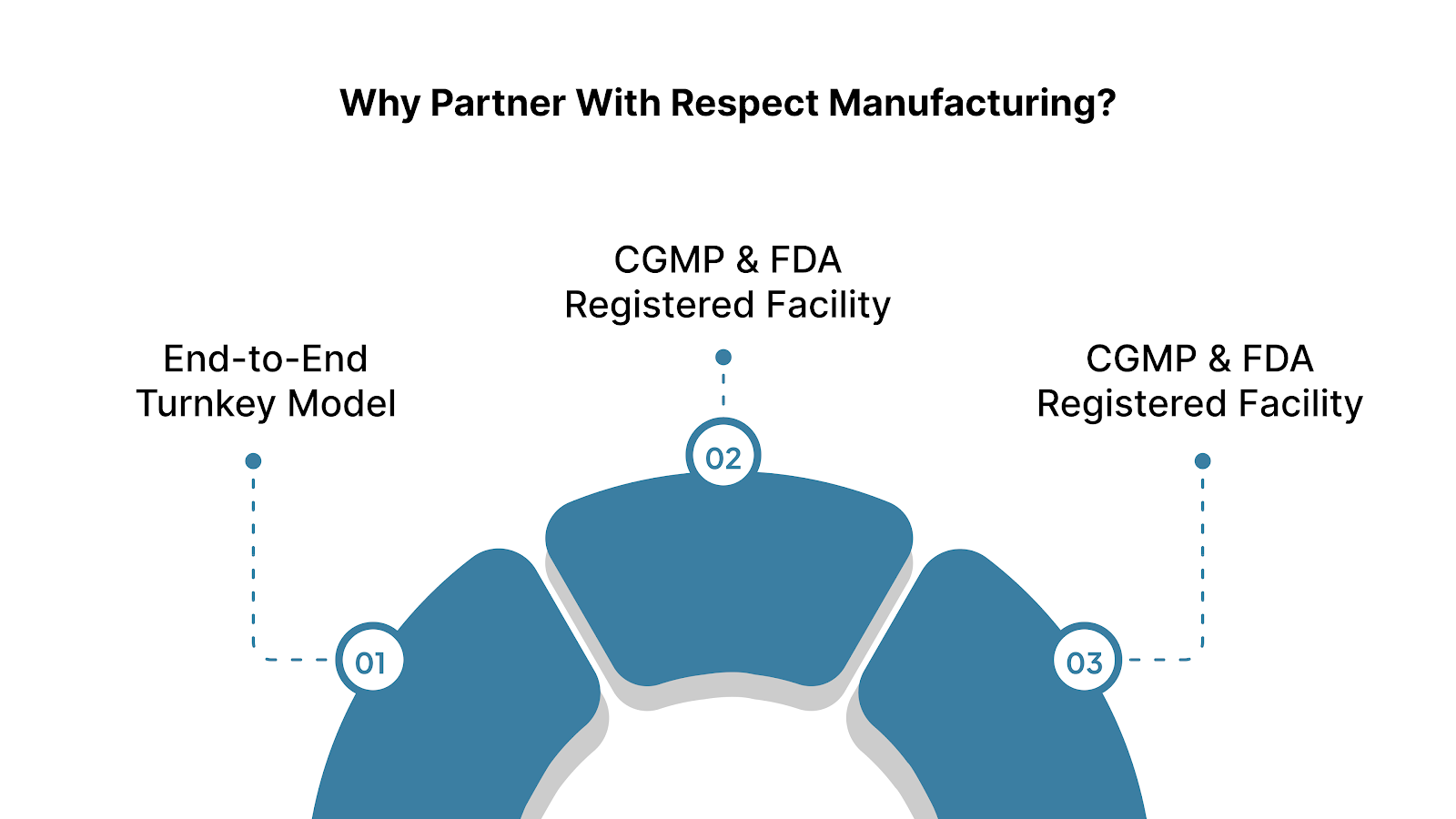
Here’s what sets Respect Manufacturing apart:
With its focus on quality, transparency, and traceability, Respect Manufacturing provides wellness and beauty brands with complete confidence in every product batch they produce.
Batch codes may look small, but they play a critical role in ensuring product safety, consistency, and compliance across every stage of manufacturing. For growing wellness, skincare, and supplement brands, understanding and implementing proper batch tracking can mean the difference between a smooth operation and an avoidable recall.
At Respect Manufacturing, every product batch is produced within a CGMP-certified, FDA-registered facility, tested through AQL and stability protocols, and documented with complete transparency. This system ensures that each brand partner can demonstrate safety, authenticity, and consistency with confidence.
Partner with Respect Manufacturing to bring your products to market with the highest levels of quality, compliance, and traceable precision.
A batch code is a short alphanumeric code printed on your product’s packaging that identifies the specific production run it came from. It helps manufacturers and consumers trace when and where the product was made, verify its authenticity, and confirm compliance with quality and safety standards.
Batch codes allow companies to pinpoint exactly which units of a product were affected by a quality or safety issue. Instead of recalling every item, brands can isolate and remove only those within a specific lot, saving time, money, and reputation while ensuring consumer protection.
Yes, in industries like dietary supplements, skincare, and personal care, the U.S. FDA’s CGMP regulations require clear batch or lot identification on packaging. This ensures traceability, accurate record-keeping, and rapid corrective action if needed. Without proper batch coding, brands risk non-compliance and possible enforcement actions.
An effective system uses a consistent, standardized format that ties each code to full production data, including ingredient sourcing, test results, and packaging details. It should integrate with your ERP or inventory management software and be easily readable on every packaging type.
Start by defining a clear batch numbering format that includes production date and sequence identifiers. Use digital systems (like ERP or quality management software) to automatically generate and store each code with related documentation. Finally, ensure your packaging partners use automated print verification and maintain batch records for at least the product’s shelf life plus one year, aligning with the FDA’s CGMP retention standards.