Schedule a Call
Ready to Upgrade Your Process Operations?
Ready to Upgrade Your Process Operations?
Explore sustainable packaging design ideas for 2026, including mycelium packaging, blockchain traceability, and refillable systems for eco-conscious brands.
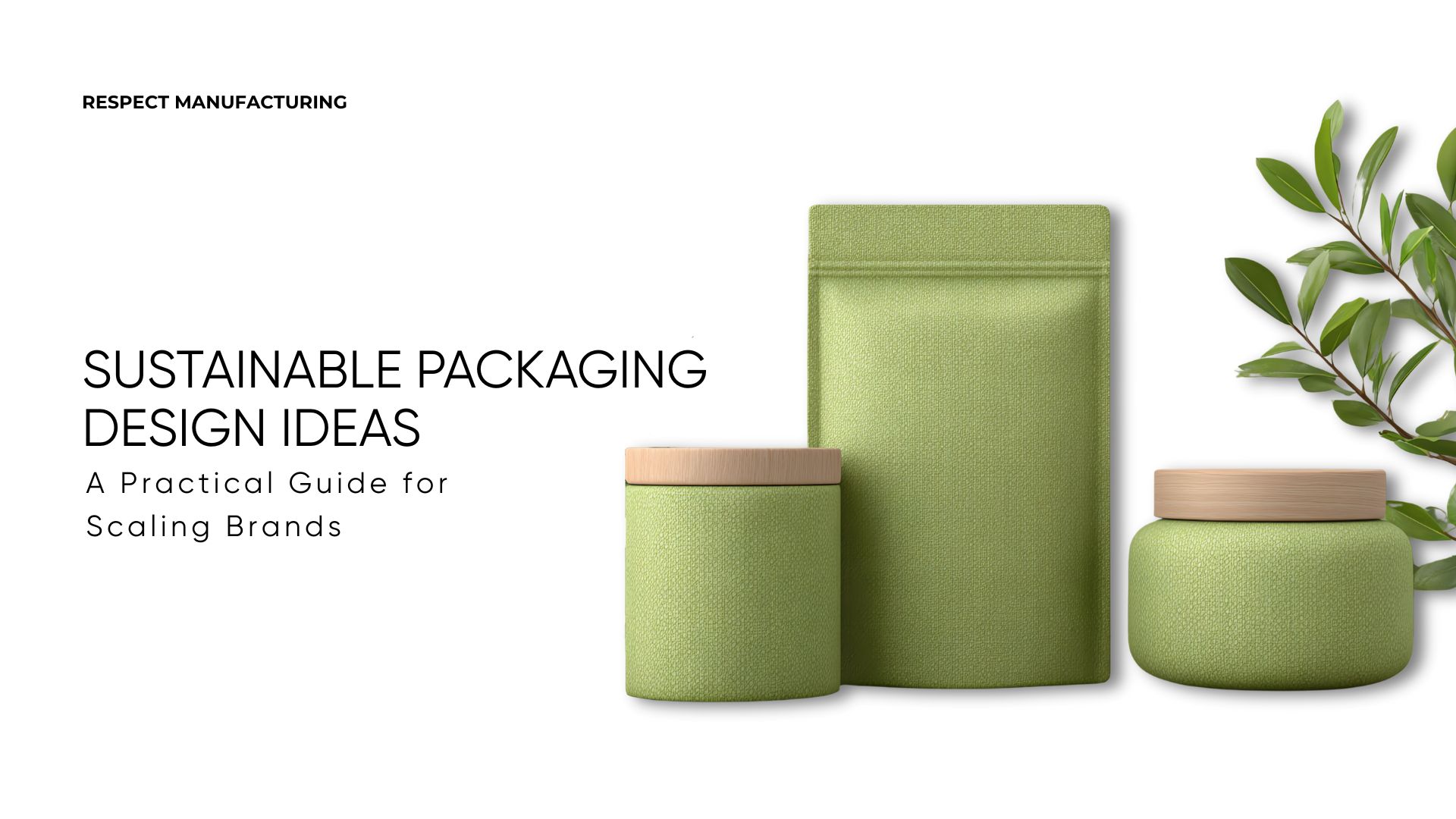
As the global demand for greener packaging swells, sustainable packaging is set to boom. The market for eco‑friendly packaging is projected to reach US$448.5 billion by 2030. For brands in personal care, supplements, and wellness, packaging is no longer just a functional element; it’s a critical part of brand identity and consumer appeal.
In this blog, we will explore sustainable packaging design ideas that are practical and innovative. These ideas aim to help you create packaging that aligns with sustainability goals while addressing scalability, compliance, and brand differentiation.
Sustainable packaging uses materials and designs that reduce environmental impact. In 2026, brands must focus on renewable, recyclable, and biodegradable materials while ensuring packaging is functional and scalable.
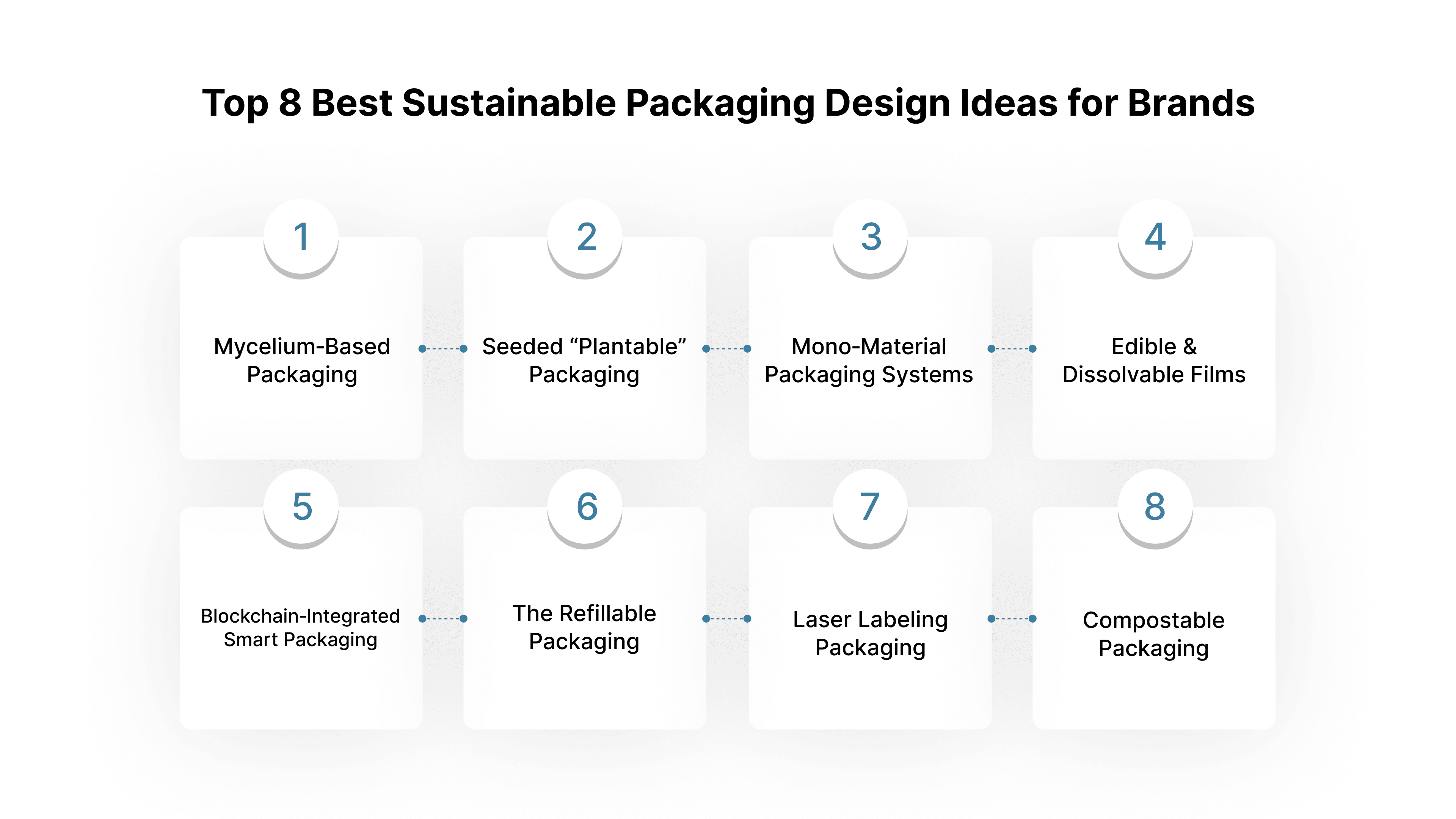
Here are ten cutting-edge packaging design concepts tailored for brands looking to innovate in 2026. These ideas blend aesthetic appeal with the manufacturing and supply chain realities.
Mycelium packaging is made by growing the root structure of mushrooms (mycelium) onto agricultural waste (like hemp hurd, corn husks, or sawdust). The fungal mycelium naturally binds this substrate into a solid, protective material that can be molded into custom shapes. Once formed, these packaging units are dried and ready for use, and after their useful life, they are fully biodegradable and compostable.
Benefits:
Example Use Case:
Respect Manufacturing offers a turnkey mushroom‑powder manufacturing service, covering formulation, packaging (sachets, jars, bottles), and complete supply‑chain management. They can produce a range of mushroom powders, such as reishi, lion’s mane, chaga, cordyceps, shiitake, or custom blends, all manufactured in their cGMP‑compliant facility.
Plantable packaging uses paper or paperboard embedded with real seeds that can germinate when planted. Instead of ending up as waste, the packaging transforms into flowers, herbs, or vegetables, giving packaging a second life and converting waste into growth. This concept shifts packaging from a disposable item to a regenerative one.
Benefits:
Example Use Case:
Botanical PaperWorks, a company that produces 100% recycled, seed‑embedded plantable packaging, has supplied brands with seeded boxes and inserts designed to grow into wildflowers or herbs.
Mono-material packaging uses just a single polymer, paper, metal, or glass for the entire design package of bottle, cap, label, and pump (e.g., 100% PET or PE). Because the package is made from a single material, it can be recycled more easily rather than broken into parts. This simplicity makes mono-material packaging a practical path toward reducing waste, improving recyclability, and supporting a circular economy.
Benefits:
Example Use Case:
Unilever (Simple Skincare) uses 100% HDPE tubes and caps, including a removable, patented mono-material pump, where the entire plastic bottle is reusable, recyclable, or compostable.
Also Read: Organic Private Label Skin Care Manufacturing and Packaging
Edible or dissolvable films are thin sheets or coatings made from natural, food‑grade biopolymers (such as proteins, starches, seaweed, or gums) that can either be safely consumed or dissolve in water after use.
These packaging solutions replace single‑use plastics or conventional packaging materials, reducing waste and environmental burden while offering a novel, low‑waste alternative, like single‑serve items or dry goods.
Benefits:
Example Use Case:
Notpla’s (formerly Skipping Rocks Lab) primary product, Oohos, is an edible, flexible sphere used to encapsulate liquids like water, juice, and cocktails, or condiments like ketchup. They use a natural, seaweed-based polymer that is entirely compostable in 4-6 weeks or can be eaten with the contents.
Blockchain‑integrated smart packaging merges traditional packaging with digital traceability. Packages get fitted with unique identifiers (QR codes, NFC tags, or RFID chips) linked to an immutable blockchain ledger. This means every step, from ingredient sourcing, production batches, shipping, to final delivery, gets logged in a way that cannot be altered or tampered with.
Benefits:
Example Use Case:
Nestlé has piloted blockchain traceability for milk sourced in New Zealand: through a partnership with OpenSC, the milk’s entire supply‑chain journey, from farm to factory and warehouses, is logged on an open blockchain ledger, giving consumers access to verified sourcing, sustainability, and origin data.
Refillable packaging is a system where the main container, be it a bottle, jar, or tube, stays with the customer and gets refilled when the product runs out. The refill comes in a smaller pouch, cartridge, or sachet. This model reduces reliance on single‑use containers and cuts down packaging waste over multiple use‑cycles.
As consumers adopt eco‑conscious habits, refillable systems offer a sustainable alternative for brands with repeat‑use products like skincare, supplements, or personal care.
Benefits
Example Use Case:
Brands partnering with Respect Manufacturing can utilize their turnkey capabilities, including stickpacks, sachets, bottles, jars, tubes, sample packaging, balms, and refillable packaging options, to implement a refill system. By combining high-quality product formulation and scalable supply‑chain management with refillable packaging, brands can deliver repeat‑use products without managing manufacturing or logistics themselves.
Laser labeling, or label-free packaging, involves etching or engraving product information directly onto the packaging surface using laser technology. Instead of using traditional labels that require adhesives, plastic, or paper, the laser etches data such as batch numbers, expiration dates, logos, or product details directly onto materials like glass, metal, or plastic.
Benefits
Example Use Case:
Lush Cosmetics has embraced laser etching for some of its products, like solid shampoo bars and bath products, to eliminate paper and plastic labels. Their label-free packaging reduces waste and communicates to consumers that Lush is committed to sustainability without compromising on aesthetics or product integrity.
Compostable packaging refers to materials that break down naturally into non-toxic components under the right environmental conditions, such as composting environments. These materials come from plant-based substances like corn starch, plant fibers, or bioplastics.
Algae-based inks are made from algae oils, which are non-toxic, biodegradable, and use renewable resources. The inks provide the same print quality as conventional inks but with a much lower environmental impact.
Benefits
Example Use Case:
Sappi and Algix, two leaders in the packaging industry, have developed a solution using algae-based inks for sustainable packaging. This combination of compostable materials and algae-based printing helps brands minimize plastic waste and reduce carbon emissions.
As the demand for sustainable packaging continues to rise, adopting eco-friendly packaging solutions is no longer optional but essential for brands aiming to meet evolving consumer expectations and regulatory standards.
From mycelium packaging to refillable systems and algae-based inks, innovative designs offer both environmental benefits and enhanced brand value. These solutions enable brands to reduce waste, lower carbon footprints, and differentiate themselves in a crowded market.
At Respect Manufacturing, your premier contract manufacturer for dietary supplements, skincare, and personal care, we help you turn sustainability goals into reality. We offer a full suite of services, including formulation, packaging, and supply chain management, ensuring high-quality, market-ready products with rigorous testing and strict adherence to CGMP standards.
Contact us today to start building your sustainable brand and make a positive impact on both your business and the environment.
The 7 R's of sustainable packaging are Refuse, Reduce, Reuse, Recycle, Repair, Recover, and Rethink. These principles guide brands in minimizing environmental impact by eliminating unnecessary packaging, optimizing material usage, and promoting reuse and recycling.
SPC (Sustainable Packaging Coalition) is a membership-based organization that focuses on advancing sustainable packaging through collaboration and innovation. It provides resources, industry guidelines, and tools to promote eco-friendly practices in packaging.
The five principles of sustainability are Environmental Protection, Social Equity, Economic Viability, Cultural Respect, and Intergenerational Responsibility. These principles aim to ensure that resources are used efficiently while benefiting both people and the planet.
SPC (Sustainable Packaging Coalition) is a group dedicated to creating sustainable packaging solutions. PIL (Packaging Innovation Lab) is a concept or space where companies test and develop innovative, sustainable packaging technologies to improve product lifecycle management.
The five pillars of sustainability are Environmental, Social, Economic, Cultural, and Political sustainability. These pillars help guide organizations in balancing ecological responsibility, social equity, economic growth, and governance to create long-term value.